Leather vs. Waxed vs. Nylon vs. Paracord Laces: Which Is Best for Your Boots?
Boot laces affect more than the appearance of your footwear. The right pair should fit your boot’s eyelets, tighten comfortably, and stay secure during everyday use. The wrong pair can be difficult to adjust, wear out quickly, or look out of place.
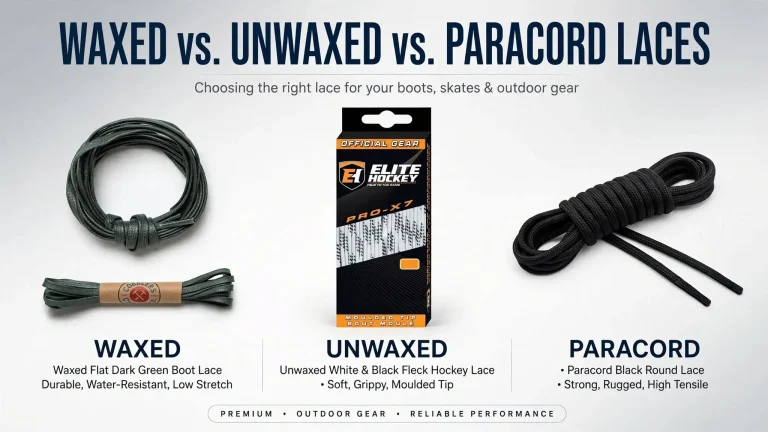
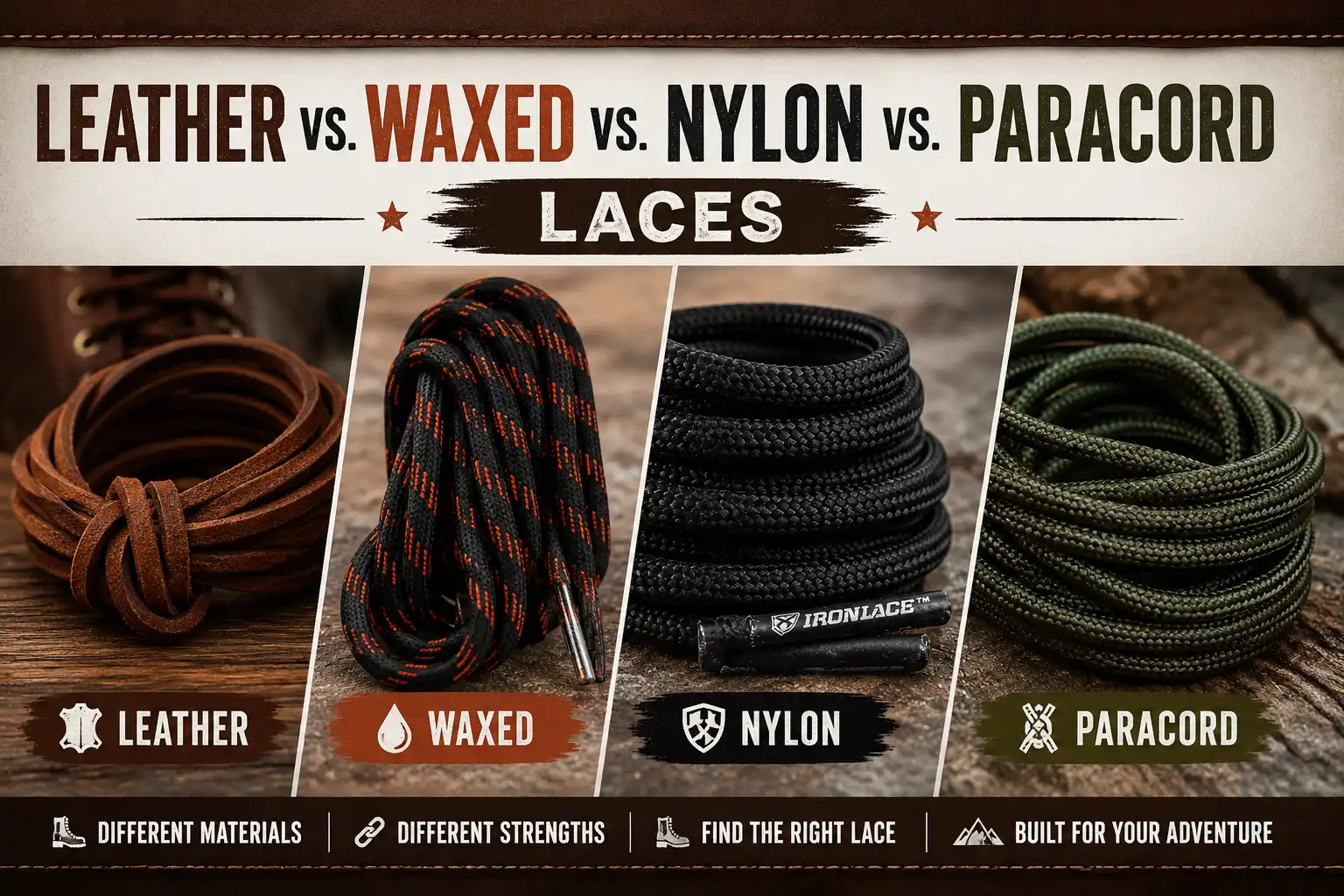
Leather, waxed cotton, nylon, and paracord each have different strengths. Leather suits traditional footwear, waxed laces offer a classic finish, nylon is practical for regular outdoor use, and paracord provides a rugged cord-style alternative.
This guide compares their advantages, limitations, and best uses to help you choose boot laces that suit your footwear and daily activities.
Quick Comparison: Leather vs. Waxed vs. Nylon vs. Paracord
| Lace Material | Best For | Main Advantage | Main Limitation |
|---|---|---|---|
| Leather | Heritage and traditional boots | Natural, classic appearance | Requires appropriate care |
| Waxed cotton | Casual, service, and dress boots | Good knot grip and refined finish | Wax wears down with use |
| Nylon | Work, hiking, and outdoor boots | Practical durability and quick drying | Performance varies by construction |
| Paracord | Rugged outdoor and utility boots | Braided construction and cord-like feel | May be too thick for some eyelets |
A useful distinction: Waxed refers to a finish rather than a separate fiber. Most waxed laces are made from cotton. Paracord is commonly made from nylon, but its braided construction differs from that of conventional nylon boot laces.
1. Leather Boot Laces
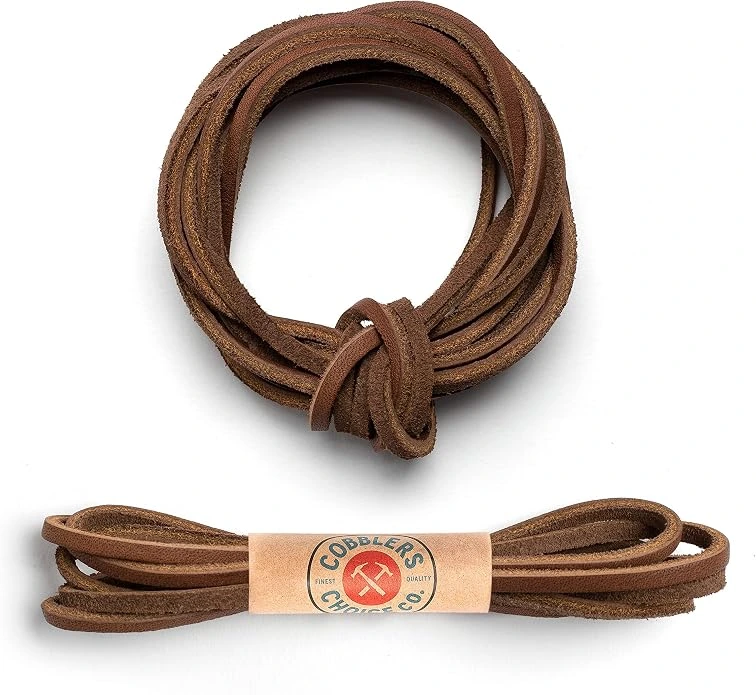
Leather laces are a natural match for heritage boots, moc-toe footwear, and traditional leather shoes. Their texture and appearance complement boots designed around a classic style.
Advantages
- Traditional appearance: Works well with vintage-inspired and heritage footwear.
- Natural texture: Offers a distinctive look compared with woven synthetic laces.
- Style compatibility: Suits boots originally designed to use leather laces.
Disadvantages
Leather can become stiff, dry, or brittle if it is poorly maintained or repeatedly exposed to harsh conditions. Its flexibility and lifespan depend on the leather type, thickness, and finish.
Leather laces may also be less practical for demanding outdoor activities where frequent tightening, moisture, and abrasion are concerns.
Who Should Choose Leather Laces?
Choose leather laces if appearance is a priority and you want to preserve the traditional look of your boots. They are particularly suitable for heritage and casual footwear.
For work boots that regularly encounter mud, rain, or rough surfaces, compare synthetic alternatives before buying.
2. Waxed Boot Laces
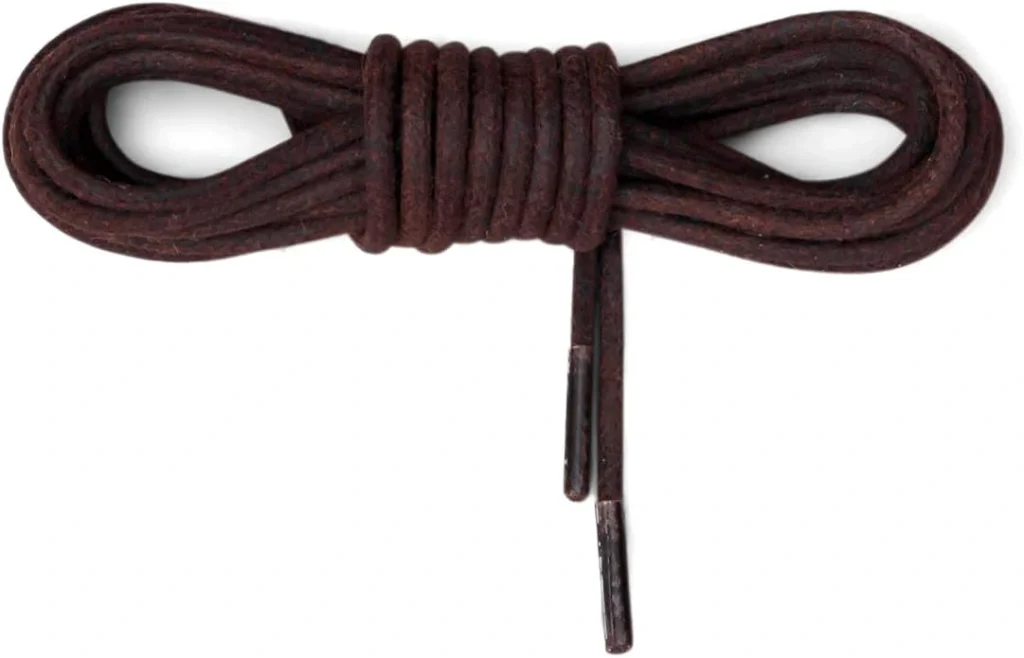
Waxed cotton laces combine a traditional appearance with useful everyday performance. The coating gives them a subtle sheen and can improve knot grip, depending on the lace’s construction.
They are commonly used with service boots, dress boots, and casual leather footwear.
Advantages
- Good knot grip: Many waxed cotton laces hold a properly tied knot securely.
- Refined finish: Complements polished and casual leather boots.
- Light moisture resistance: Wax can help repel some moisture but does not make laces waterproof.
- Versatile styles: Available in different lengths, colors, and flat or round profiles.
Disadvantages
Waxed laces may feel stiff initially, and the coating gradually wears away through friction. Their performance also depends on the underlying fibers and construction.
A wax coating alone does not make a lace suitable for heavy-duty work. For demanding conditions, compare the complete product rather than relying on the finish.
Who Should Choose Waxed Laces?
Waxed laces are a strong option for everyday leather boots when you want a classic appearance and reliable knotting. They are particularly suitable for service boots and casual footwear that does not face constant severe abrasion.
3. Nylon Boot Laces
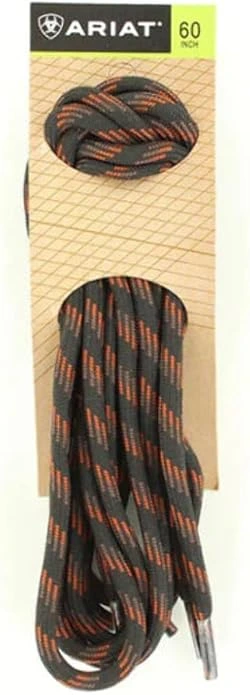
Nylon laces are a practical choice for boots used regularly at work, on hiking trails, and outdoors. Nylon is a synthetic fiber known for its strength relative to its weight, abrasion resistance, and relatively low moisture absorption.
However, quality varies. A tightly braided, heavy-duty lace may perform differently from a thin, loosely woven version.
Advantages
- Abrasion resistance: Well-made nylon laces can handle repeated friction against eyelets and hooks.
- Quick drying: Nylon generally absorbs less water than untreated cotton.
- Flexibility: Many nylon laces tighten smoothly around boot hardware.
- Wide selection: Available in different thicknesses, lengths, colors, and constructions.
Disadvantages
Some nylon laces have smooth surfaces that may loosen when tied poorly. Thin or loosely constructed versions may also wear faster than expected.
Nylon is not suitable for every work environment. High heat and direct contact with flames can damage it, so standard nylon laces should not be assumed appropriate for welding or other high-heat tasks.
Who Should Choose Nylon Laces?
Choose nylon if you need versatile replacement laces for work boots, hiking boots, or regular outdoor use. Check the weave, thickness, and intended application instead of assuming every nylon lace offers the same durability.
4. Paracord Boot Laces
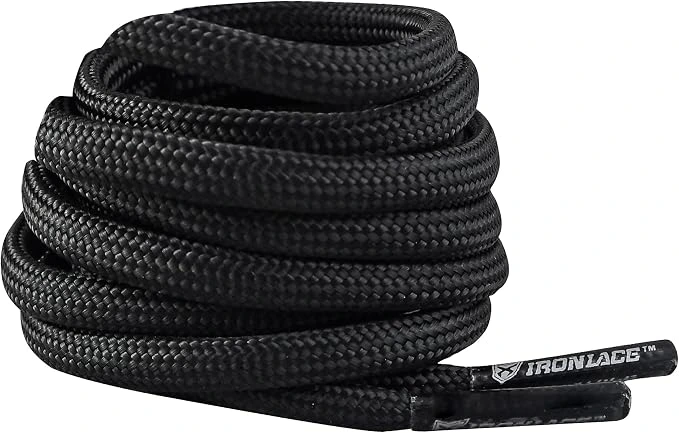
Paracord is a braided cord traditionally associated with parachute suspension lines and outdoor utility use. Common 550 paracord has a nylon outer sheath surrounding multiple inner strands.
Its construction gives it a distinctive cord-like profile that appeals to people who prefer rugged footwear accessories. However, standard utility cord and purpose-made boot laces are not always interchangeable.
Advantages
- Braided construction: Offers a cord-style alternative to conventional woven laces.
- Outdoor appearance: Suits rugged and utility-focused footwear.
- Synthetic fibers: Nylon paracord generally handles moisture better than untreated cotton.
- Distinctive profile: Provides a round, substantial look.
Disadvantages
Thickness is the main concern. Some paracord is too bulky for small eyelets or narrow speed hooks, making it harder to thread and adjust.
Knot security also depends on the cord’s surface and construction. Paracord is not automatically stronger or more secure than every conventional boot lace.
The commonly cited 550 rating refers to the cord’s stated strength under specified testing conditions. It does not guarantee that a finished boot lace, including its tips and attachments, will have the same performance.
Who Should Choose Paracord Laces?
Paracord is worth considering for rugged outdoor or utility boots if its diameter fits the hardware. Check the product dimensions and intended use before replacing your regular laces.
Which Boot Lace Material Is Best for Different Uses?
The right material depends on how you wear your boots and what matters most to you.
Work Boots
Consider nylon for regular heavy use or waxed laces for everyday work footwear with a traditional look.
Nylon is a practical option when friction and moisture are common. Waxed laces may suit less demanding conditions where appearance and knot grip matter.
For jobs involving sparks, extreme heat, or hazardous chemicals, follow workplace footwear requirements. Ordinary boot laces are not protective equipment.
Hiking Boots
Look for durable, purpose-made synthetic hiking laces.
They should tighten evenly, fit the eyelets, and hold a secure knot. Avoid laces that are so thick they become difficult to adjust or so thin that they wear rapidly under repeated friction.
Paracord can work if it fits properly, but a rugged appearance alone does not make it the better hiking option.
Heritage and Leather Boots
Choose waxed cotton or leather for a traditional finish.
Waxed cotton often provides good knot grip, while leather offers a more natural appearance. If the original laces fit comfortably and complement your boots, replacing them with a similar profile is a reliable starting point.
Wet Conditions
Consider nylon or suitable paracord if quick drying is important.
Both commonly use synthetic fibers that absorb less water than untreated cotton. Waxed laces can resist some light moisture, but the coating does not make them waterproof.
Your boots’ materials, seams, and waterproof membrane—if present—matter far more for keeping your feet dry.
Everyday Casual Boots
Waxed laces are a good option when you want traditional styling and practical knot grip.
Nylon is also suitable if you prefer a straightforward synthetic alternative. Match the color, length, and shape to your footwear rather than choosing by material alone.
What to Check Before Buying Replacement Boot Laces
Material is only one part of the decision. Check these four details before ordering.
1. Lace Length
Your laces need to reach every eyelet and hook while leaving enough length for a secure knot.
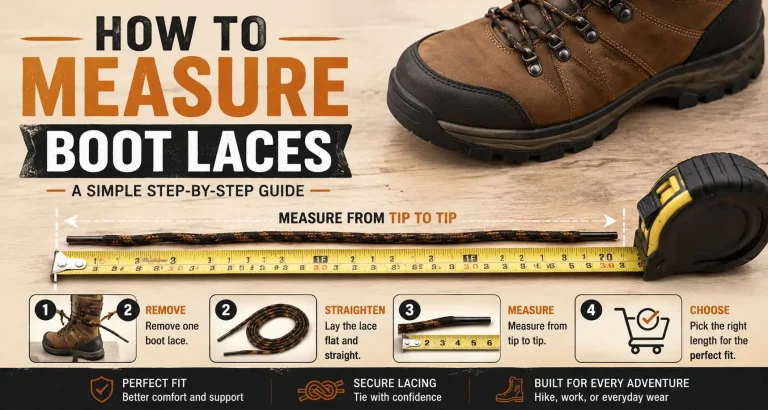
If you still have your original laces, measure them from tip to tip. Otherwise, count the eyelets and hooks and consult the manufacturer’s sizing guide.
Boot size alone is not a reliable way to select lace length because different designs use different lacing systems.
2. Lace Thickness
The lace must pass through your boot’s hardware without catching or creating excessive friction.
Thick paracord may be difficult to use with small eyelets, while very thin laces can look out of proportion on heavy work boots. Check the listed diameter when available, especially if you are changing materials.
3. Shape and Construction
Flat, round, braided, and cord-style laces can feel and perform differently, even when made from similar fibers.
If your existing laces tighten comfortably, choosing a similar profile is often the easiest option. Consider a different construction when you have a specific reason, such as changing the appearance or choosing a lace better suited to your conditions.
4. Tips and Hardware Compatibility
The tips, often called aglets, help guide laces through eyelets and hooks. Damaged or poorly finished tips can make threading difficult.
Check that the tips and lace diameter fit your boot’s hardware. If your boots use speed hooks, make sure the laces tighten and release smoothly.
How to Care for Different Boot Laces
Basic maintenance can help keep your laces in usable condition.
- Leather: Wipe away dirt gently, avoid prolonged soaking, and follow care guidance for the specific leather.
- Waxed cotton: Clean gently to avoid stripping the wax coating.
- Nylon: Follow the manufacturer’s cleaning instructions. Mild soap and water may be suitable for many products.
- Paracord: Remove dirt from the braid, clean gently when needed, and allow it to dry fully.
Inspect laces for fraying, cuts, thinning sections, or damaged tips. Replace them when they no longer tighten reliably or show signs of damage that could cause failure during use.
Final Verdict
Each material has a clear purpose:
- Leather: Best for a traditional look on heritage and casual boots.
- Waxed cotton: Best for classic styling and good knot grip.
- Nylon: Best for versatile work, hiking, and outdoor use.
- Paracord: Best for rugged cord-style laces that fit your boot hardware.
Before buying, confirm the length, diameter, and compatibility with your boot’s eyelets or hooks. These details will help you choose laces that fit properly and suit the conditions in which you wear your boots.