
Best Laces for Work Boots: Durable Picks for 2027
Work boot laces go through a lot. They rub against metal eyelets, get covered in dirt, deal with moisture, and stay under tension during long shifts. When they start fraying, breaking, or coming untied, even a reliable pair of boots can become frustrating to wear.
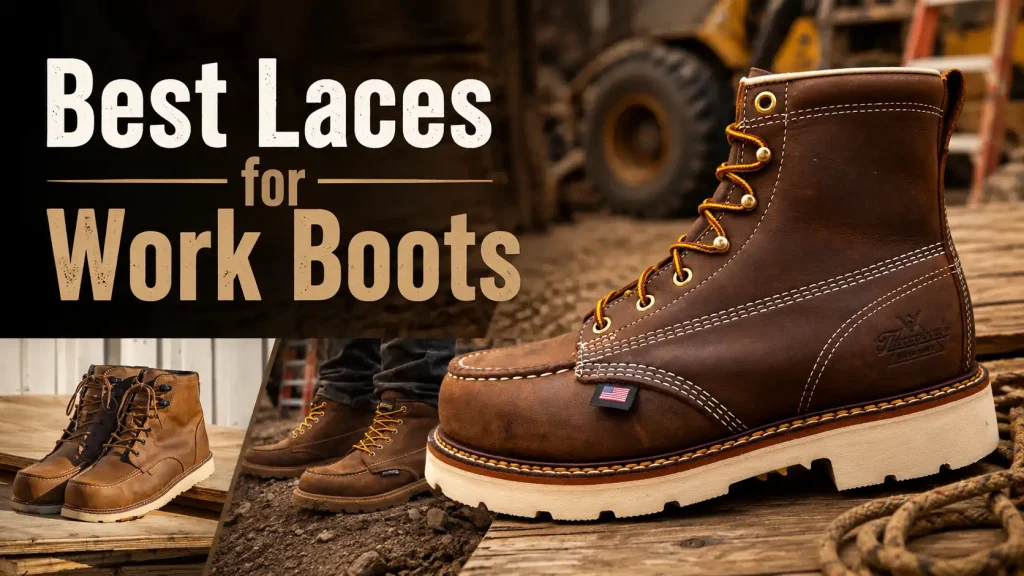
The best laces for work boots depend on how you use your footwear. If you spend your days on a construction site, you may need a tougher replacement than someone working in a warehouse or wearing boots for everyday tasks. Outdoor workers may also want laces that handle damp conditions and hold a secure knot.
To help you choose, we compare three options for different needs: Miscly Heavy Duty Round Laces for everyday work boots, Ironlace Unbreakable Boot Laces for demanding use, and Obenauf’s Waxed Boot Laces for outdoor work and leather footwear. We’ll also cover lace materials, sizing, and the signs that it’s time for a replacement.
Best Work Boot Laces at a Glance
| Product | Best For | Key Feature | Potential Drawback |
|---|---|---|---|
| Miscly Heavy Duty Round Laces | Everyday work boots | Reinforced nylon core with a braided polyester outer layer | Limited color choices |
| Ironlace Unbreakable Boot Laces | Demanding work conditions | Para-aramid fiber construction | May be more than casual users need |
| Obenauf’s Waxed Boot Laces | Outdoor work and leather boots | Waxed finish designed to help knots grip | Wax coating can wear down with use |
Prices, colors, lengths, and availability can vary. Check the current product listing for the exact version you intend to purchase.
1. Miscly Heavy Duty Round Laces: Best for Everyday Work Boots
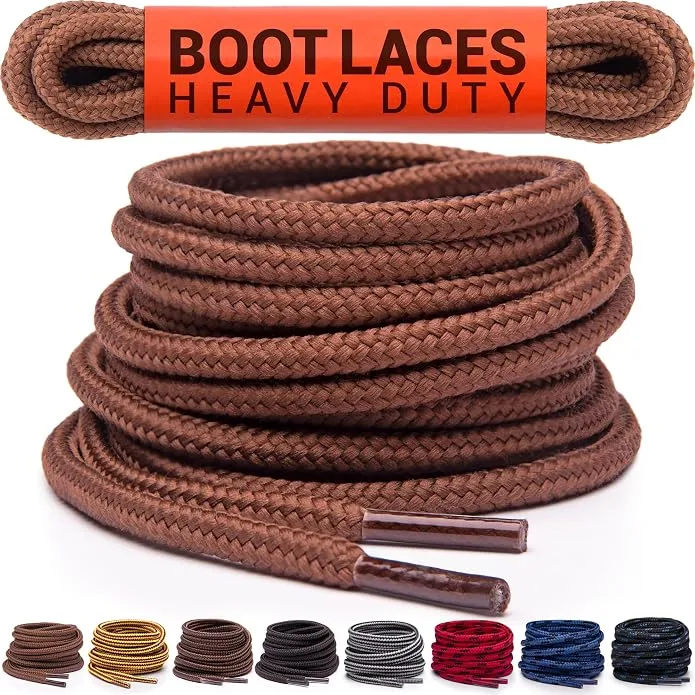
If you wear work boots most days, you probably want laces that are practical, durable, and easy to replace. Miscly Heavy Duty Round Laces are worth considering for that kind of everyday use.
They feature a nylon core surrounded by a braided polyester outer layer. This construction makes them an option for people who want a sturdier replacement than a basic lightweight lace. The multipack is another advantage: you can keep a spare pair ready or replace the laces on more than one set of boots.
Miscly offers several lengths, including options from 45 to 72 inches. That range covers many boots, although you should still measure your existing laces or check a sizing guide before ordering.
Best for: Everyday construction work, warehouse shifts, maintenance jobs, and general work boot use.
What makes them worth considering?
- Reinforced construction for regular wear.
- Multiple lengths to suit different boot designs.
- A multipack that provides spare laces.
- A straightforward option for everyday replacement needs.
What to consider: The available colors are practical rather than extensive. Also, a heavy-duty label does not guarantee that a lace will suit every industrial environment. Check the thickness and construction against your boot’s hardware and working conditions.
Our take: Miscly is a sensible starting point if you need replacement laces for everyday work boots and want a practical balance of construction, availability, and convenience.
2. Ironlace Unbreakable Boot Laces: Best for Demanding Conditions
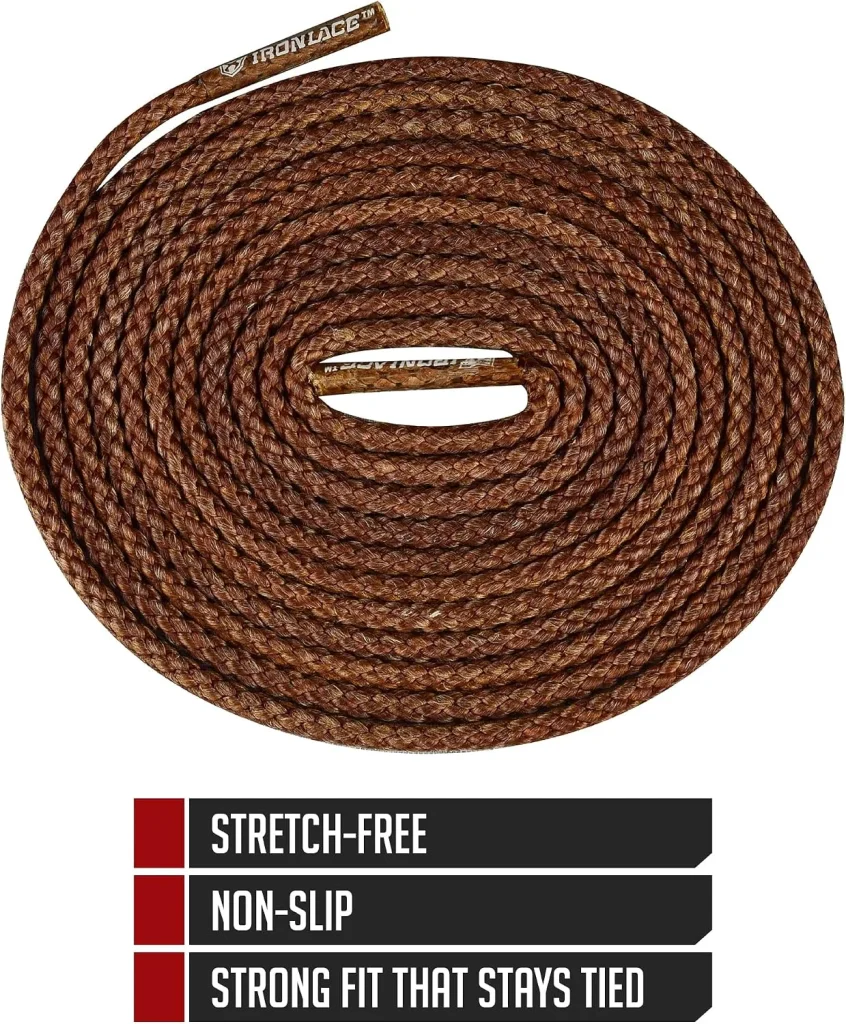
Some workers find themselves replacing ordinary boot laces far too often. Repeated friction, tight bends around metal hardware, and demanding daily use can wear down a lace before the boots themselves need replacing.
Ironlace Unbreakable Boot Laces are designed for users who want a more specialized option. They use para-aramid fiber, a high-strength synthetic material used in demanding applications. That construction makes them worth considering when ordinary laces have not lasted well enough for your needs.
However, choosing a specialist lace is not automatically the right move for everyone. If your boots see light use, you may not need the extra capabilities. It’s worth weighing the intended use against the price and the specific features listed by the manufacturer.
Best for: Workers who put substantial wear on their boot laces and need a specialist replacement.
What makes them worth considering?
- Para-aramid fiber construction.
- Designed with demanding use in mind.
- An alternative to conventional nylon and polyester laces.
What to consider: Check the available length and color for your boots before ordering. If your work involves welding, sparks, open flames, or extreme heat, verify the manufacturer’s specifications and your workplace’s protective-equipment requirements. A material’s heat-resistance rating alone does not establish that it is suitable for every hazardous environment.
Our take: Ironlace is the option to investigate when durability is your main concern and you have a genuine reason to choose a specialist lace over a standard replacement.
3. Obenauf’s Waxed Boot Laces: Best for Outdoor Work
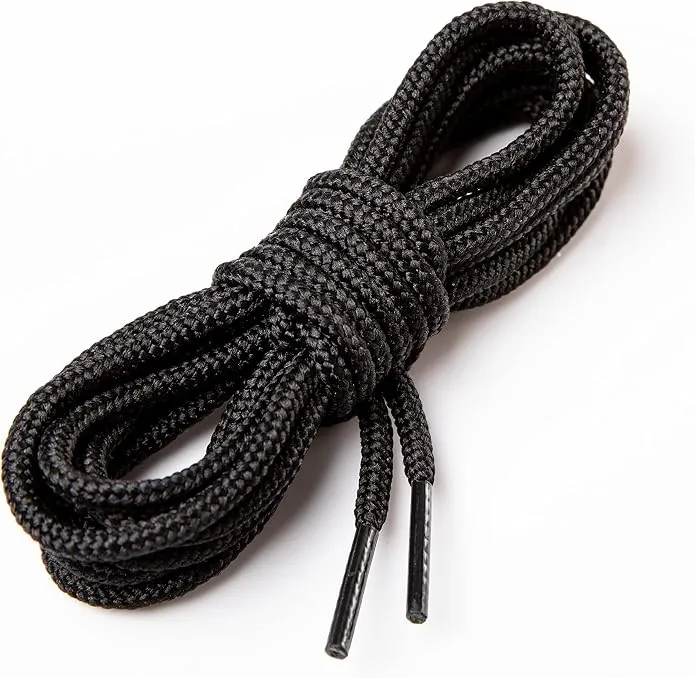
Outdoor work brings its own challenges. Your boots may encounter mud, damp ground, rain, and repeated movement throughout the day. In these conditions, a lace that ties securely and suits your footwear can make a practical difference.
Obenauf’s Waxed Boot Laces use a cotton and polyester blend with a beeswax coating. The waxed finish is intended to help the laces grip when tied and resist some moisture. Their traditional appearance also makes them a natural option for leather work boots and other rugged footwear.
One important detail is length. A 54-inch lace may suit some boots, but taller styles with more eyelets and speed hooks can require considerably longer laces. Measure before buying rather than assuming that one size fits all.
Best for: Outdoor work, hunting, and traditional leather boots.
What makes them worth considering?
- Waxed construction designed to help knots grip.
- A traditional look that suits leather footwear.
- An option for outdoor users who want a waxed lace.
What to consider: Wax does not make a lace completely waterproof, and the coating can wear down over time. Check the available sizes carefully, especially if you wear tall work boots.
Our take: Obenauf’s is worth considering if you prefer a waxed lace for outdoor work or want a traditional style for your leather boots.
How to Choose the Best Laces for Work Boots?
A good replacement should fit your boots properly, hold securely when tied, and suit the conditions in which you work. Before purchasing, pay attention to these five details.
Choose the Right Material
Lace material affects how it handles friction, moisture, and everyday wear. Different constructions have different strengths, so consider the conditions your boots face rather than choosing by material name alone.
- Nylon: Common in everyday boot laces and useful when you want a practical replacement.
- Polyester: Often used in braided outer layers and blended lace constructions.
- Para-aramid: A high-strength synthetic fiber worth considering for specialized applications.
- Waxed cotton blends: An option for users who prefer a waxed finish and a more traditional appearance.
For most everyday work boots, a well-made conventional lace may be sufficient. Specialist materials are worth considering when their particular properties address a real need.
Look for Secure Knot Performance
Laces that keep coming undone can interrupt your shift and create a potential tripping hazard. A lace’s surface texture, shape, and construction can influence how it behaves when tied, but the knot itself matters too.
If your laces repeatedly loosen, make sure you are tying them securely and check whether the material is worn or damaged. A double knot may help, provided it does not interfere with your work or boot fit.
Get the Length Right
Even a durable lace can be frustrating if it’s too short to tie properly or leaves long ends that drag or catch on equipment.
The correct length depends on several factors:
- The number of eyelet pairs and speed hooks.
- The height and design of your boots.
- The spacing between the eyelets.
- Your preferred lacing pattern and knot.
If your current laces fit well, remove one and measure it from tip to tip. If it has always been too short or too long, use the measurement as a starting point and adjust accordingly.
Need help finding the right size? Visit our Boot Lace Length Chart for guidance.
Check Thickness and Compatibility
Thicker laces may look and feel more substantial, but they can be difficult to thread through narrow eyelets or speed hooks. Thin laces may fit more easily but might not be the best match for every boot.
Before buying, check the product’s listed diameter if available. Make sure the lace fits your boot hardware without forcing it through the eyelets.
Consider Your Working Conditions
The best choice for a warehouse worker may differ from what an outdoor construction worker needs. Think about the conditions your boots face most often.
- Indoor and warehouse work: A dependable everyday replacement may be enough.
- Construction and general outdoor work: Consider durable construction and a suitable fit for your boot hardware.
- Wet conditions: Look for information about moisture resistance, but don’t assume any lace is completely waterproof.
- High-temperature work: Check the manufacturer’s specifications and follow your workplace’s PPE requirements.
Choose according to the actual demands of your job rather than relying on a product’s marketing label.
Why Do Work Boot Laces Keep Breaking?
If you’re replacing your laces every few weeks, the problem may not be the lace alone. Your boot’s hardware, fit, or lacing setup could be contributing to the wear.
Check these common causes before buying another pair:
- Sharp eyelets or speed hooks: Rough edges and burrs can cut or fray the lace at the same point repeatedly.
- Incorrect lace thickness: A lace that is too thick for the hardware may rub excessively or become difficult to tighten.
- Repeated friction: Tight bends around hooks and eyelets can wear down the outer fibers over time.
- Worn-out material: Fraying, cuts, and broken fibers indicate that a lace may need replacing.
- Poor fit or lacing: Excessively tight lacing can increase stress on particular sections of the lace.
Inspect the boot hardware if the same lace keeps failing in the same place. Replacing a damaged lace without addressing a sharp edge may simply lead to another failure.
When Should You Replace Work Boot Laces?
There is no fixed replacement schedule because wear depends on your work, boot design, and lace material. Instead, inspect your laces regularly, especially if you wear your boots for long shifts or in demanding conditions.
Replace a lace when you notice:
- Fraying around eyelets or speed hooks.
- Cuts, broken fibers, or visibly weakened sections.
- Damaged tips that make threading difficult.
- Sections that no longer tighten evenly.
- Persistent knot problems that continue despite secure tying.
Keeping a spare pair in your locker, work bag, or vehicle can also save time if a lace breaks during a shift.
Final Verdict: Which Work Boot Laces Should You Buy?
For everyday work boots, Miscly Heavy Duty Round Laces are a practical place to start. If ordinary laces wear out too quickly and you need a more specialized construction, consider Ironlace Unbreakable Boot Laces. For outdoor work and traditional leather footwear, Obenauf’s Waxed Boot Laces offer a different combination of knot grip and classic styling.
Before choosing, confirm the length, thickness, and compatibility with your boot’s eyelets and speed hooks. Consider your working conditions, too—especially if your job involves heat or other specific hazards.
The best work boot laces aren’t necessarily the most expensive or the ones with the boldest claims. They’re the ones that fit your boots, suit your work, and perform well for your particular needs.
Affiliate Disclosure
Best Boot Laces may earn a commission from qualifying purchases made through affiliate links, at no additional cost to you. As an Amazon Associate I earn from qualifying purchases.